

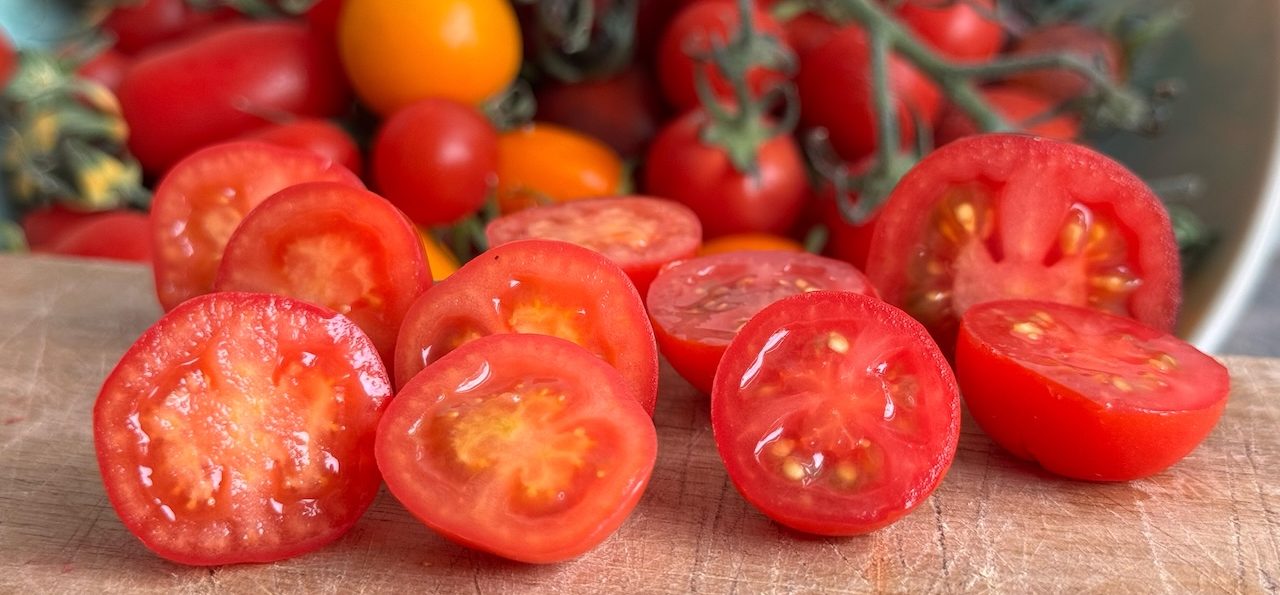
I started with some tiny little seedlings that I was given by Suttons and Thompson & Morgan at the Garden Press Show earlier this year. They were planted in paper cups and had to survive the journey home packed into a carrier bag. These tiny plants lived on our kitchen table until my husband felt that they were strong enough to replant. We eventually planted them directly into the ground in our greenhouse.
One was a heritage variety called Froglet from Suttons, and the other was another tiny seedling called Meltaway from Thompson & Morgan.
Froglet:
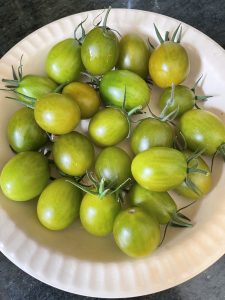
This is described as ‘A little tomato with a big personality! Tomato ‘Froglet’ is a charming heirloom-type mini plum variety, producing masses of sweet, bite-sized greeny yellow fruits perfect for summer snacking. With its high-yielding nature and reliable performance, Froglet is a fun and flavoursome addition to the vegetable garden, bringing delicious homegrown harvests to gardeners of all ages.’
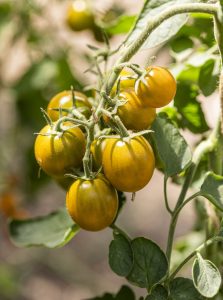
Meltaway:
Described as ‘A true breakthrough in tomato breeding with the launch of Tomato ‘Meltaway F1’.
A world-first cherry tomato that’s virtually seedless and skinless, with a soft, sweet texture that genuinely melts in the mouth. The very first variety from its top-secret breeding programme, and proof that after supplying gardeners since 1855, Thompson & Morgan is still innovating!
“It’s remarkable, these tomatoes are sweet, gummy and pure in flavour,” says Peter Freeman, New Product Development Manager at Thompson & Morgan. “Even people who don’t usually like tomatoes went back for more.”

Readers, we are so delighted with both of these varieties. Froglet in particular has gone crazy – filling the greenhouse and escaping through the top window and cascading down the sides.

Meltaway has been slightly overwhelmed by Froglet, but it’s holding its own and the tiny little fruits are a stupendous burst of intense tomato sweetness.

We’ve been eating tomatoes for months now and I’ve air dried some of the Meltaway in the air fryer, packed them in olive oil and stored them in a jar for those cold winter days when tomatoes have little flavour. They will be delicious popped on top of scrambled eggs. Others have been skinned and made into tomato sauce to freeze for winter casseroles and pasta dishes. I’m about to embark on some Froglet chutney (that will keep people wondering when they see that name on my chutney labels!) and we’ve shared so many bags of them with friends and family.
Interestingly though, my husband decided this year that he wouldn’t pinch out the new growth as is usually the received wisdom. He let them grow freely and I have to say that we’ve been truly overwhelmed with our tomato crop this year.
We also grew some other varieties of the more ‘run of the mill’ sort to great success, but these two new varieties were a revelation to us and we’ll definitely be buying them next year. Froglet is only available currently from Suttons Retail so you’ll have to look out for (or order if not in stock) the seeds (or seedlings) at your local garden centre next spring.
Microgreens – A Big Boost
The other product I discovered at the show is a wonderful range of microgreens from DT Brown.
When most people think of microgreens, varieties such as cress typically spring to mind. But there is actually a wide range of different microgreen types to choose from. If you’re looking for a new indoor gardening project, microgreens offer an opportunity to grow all kinds of interesting things and are the perfect way to introduce your children to the green, green world of gardening.
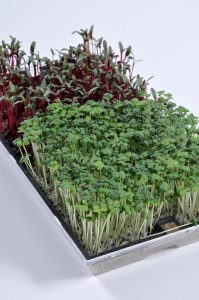
Microgreens are actually quite a broad category of plant. They’re essentially young seedlings of vegetables and herbs, making it possible to grow smaller versions of larger veg or stick to naturally smaller varieties. It’s also possible to grow your favourite larger-leaf salad vegetables as microgreens. For example – lettuce, rocket, kale, or spinach. By harvesting the leaves of these plants when they’re just young seedlings, you’ll get a regular supply of tasty greens. The leaves may be small, but they’re tender and mild-flavoured. There’s also the nutritional boost of eating seedlings, which are known to have more concentrated nutrients. This means more vitamins and minerals for you.
The benefit of growing larger-leaved plants as microgreens is you can do it all year round. You’ll have fresh, healthy, and tasty greens even if you don’t have access to the garden, or the cold weather makes it impossible to grow full-sized plants.
Did you know that you can also grow microgreens from some other vegetable seeds such as carrots, beetroot or chard seeds? You don’t need to grow the actual vegetable though. To save you space on your windowsill, you simply grow the tasty little shoots. Some of the best examples of these kinds of microgreens are Chard Bright Lights. They have the same flavour as chard, as well as attractive red and yellow coloured stems. Similarly, carrot microgreens have an intense carrot-like flavour. These feathery leaves can be added to everything from soups and stews to salads, and work particularly well in pestos. What’s more, they’re packed full of vitamins and antioxidants.
Lastly, we have microgreen types that come from the seeds of other baby vegetables. A great example is baby broccoli plants, which you’ll harvest once the seedlings are no more than a few centimetres tall. You’ll be amazed at how much they taste like broccoli but without the bitterness of the full-grown vegetable. They have an appealing texture and can be added to any meal. Also, they’re nutritious and easy to grow. Another popular choice is pea shoots, which you may have spotted on restaurant menus. Pea shoots can be grown easily at home from a number of pea varieties, and have a fresh, slightly sweet taste with a very mild pea flavour.

I’d suggest you start your microgreens journey with a growing kit from DT Brown. It will allow you to grow fresh microgreens indoors all year round. The kit includes basil, rocket and coriander seeds together with a reusable tray with two growing sections. There’s no soil required and you can harvest from approximately 5cm high. Once you’ve gained confidence with that you can add to your collection with all numbers of seed varieties from DT Brown with prices from around £4.


