
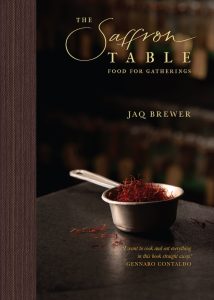
Published just in time for the festive season, chef Jaq Brewer’s debut cookbook, The Saffron Table, celebrates a lifetime of generous cooking, unforgettable gatherings and food made to share.
After more than three decades as a professional chef, she is finally sharing the recipes, stories and philosophy that have earned her a devoted following and the admiration of Britain’s best-loved food names. The book features a foreword by Italian chef Gennaro Contaldo and pays tribute to the late Antonio Carluccio OBE, whose friendship and philosophy of ‘minimum fuss, maximum flavour’ left a lasting mark on Jaq’s approach to food and hospitality. The pair met at London’s legendary Neal Street Restaurant, and their friendship lasted more than 30 years.
A career quietly feeding people: as a food stylist for a national newspaper, running her own catering company, and leading kitchens in and around Bath, was guided by the same principles: simple ingredients, bold flavours and generous hospitality. The Saffron Table is filled with vibrant recipes for every kind of gathering, from relaxed family suppers to full-blown celebrations. Recipes include: Slow-Roasted Lamb Shoulder with Prunes and Almonds; Spiced Aubergine and Brazil Nut Salad; Purple Sprouting Broccoli, Taleggio and Parmesan Pie; Spiced Chickpea Puff Parcels; Saffron Champagne Jelly and Saffron Gin Fizz amongst many more. Interwoven throughout are thoughtful, lyrical essays on taste, seasonality, sensuality, foraging, confidence in the kitchen and the art of hospitality.
ABOUT THE AUTHOR
While food has always had her heart, Jaq Brewer lived a few lives before it became her career — studying fine art, working in advertising and PR, and even running a fashion boutique — before spending years learning from some of the world’s most talented and acclaimed chefs, all generous enough to share their knowledge with her. What ties all of this together is a simple love of bringing people to the table. The Saffron Table: Food for Gatherings is her first cookbook, and her great hope for thebook is that it does just that.

The Saffron Table is an invitation to slow down, open the front door and bring people together — rich in flavour, warmth and encouragement, urging readers to cook with confidence rather than perfection, and to savour the simple pleasure of gathering around the table.
Published by Field Kitchen Publishing at £28 for a gorgeous hardback with photography by Andrew Callaghan will make a lovely Christmas gift, but I warn you, you’ll want to keep it for yourself. Here are a couple of recipes to tempt you…
BUTTERMILK PANCAKES
“Dinner doesn’t have to be the only meal to create and evoke treasured memories. These buttermilk pancakes were my mother’s favourite. They are completely moreish when bathed in maple syrup, or stacked high with crispy bacon and fresh berries for an indulgent weekend treat.”
SERVES 4
4 heaped tbsp plain flour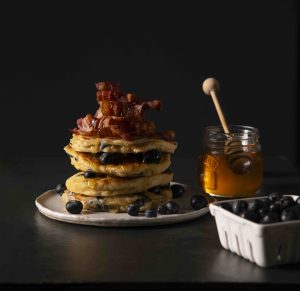
2 tbsp caster sugar
1⁄4 tsp bicarbonate of soda
2 tbsp buttermilk
2 large free-range eggs
light olive oil, neutral oil or butter, for frying
150g (51⁄3oz) blueberries, plus extra to serve (optional)
maple syrup or honey, to serve (optional)
crispy bacon, to serve (optional)
icing sugar, to dust (optional)
Ideally the night before you want to serve, in a large mixing bowl, add the plain flour, caster sugar, bicarbonate of soda, buttermilk and eggs. Whisk together until smooth and combined. Rest, covered, in the fridge overnight or as long as you’re able.
Heat the oil or butter in a wide frying pan over a medium heat.
When the fat is hot, not smoking, dollop a spoonful of the batter into the pan to create a thick pancake around 10cm (4in) in diameter. You can use a pastry cutter if you want them to all look uniform, but I prefer them to be slightly irregular shapes. I love the crunchy bits that form around the edge.
Scatter a few blueberries into the batter. When bubbles appear in the pancake, it’s time to flip them over. Cook for a few minutes more, until golden brown on both sides and the pancake easily releases from the base of the pan.
Transfer to a warm plate and repeat with more oil or butter and the remaining batter.
Transfer to serving plates, and top with maple syrup or honey, crispy bacon and some berries tumbled over, if you like.
If you’re really looking to impress, finish with a light dusting of icing sugar.
MOROCCAN ZAALOUK
“Silky, smoky and deeply warming, zaalouk sits somewhere between salad and a dip – it is one of those dishes that appears quietly on the table and then disappears first. It tastes of long lunches and treasured evenings. I like it warm, spooned onto charred bread with good olive oil and plenty of flat-leaf parsley.”
SERVES 8
2 large aubergines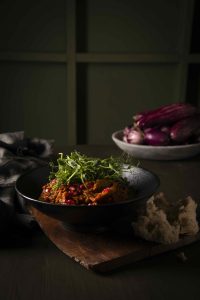
2 large red peppers
4 tbsp olive oil, plus extra to serve
3 garlic cloves, crushed
1 tsp ground cumin
1 tsp smoked paprika
1⁄2 tsp ground turmeric
1 pinch of dried chilli flakes
3 ripe tomatoes, grated or finely chopped, or 1 x 400g (14oz) tin of plum tomatoes
Sea salt
freshly ground black pepper
juice of 1⁄2 unwaxed lemon
1 small bunch of flat-leaf parsley, chopped
1 small handful of toasted almonds, to serve
1 small handful of pomegranate seeds, to serve
pea shoots, to serve (optional)
Over a gas flame on the hob, on a hot barbecue, or under a pre-heated grill, char the whole aubergines and peppers, turning regularly with tongs, for 10–15 minutes, until charred and blistered, completely tender and smoky. You can also roast them in a preheated oven at 220oC/200oC fan/425oF/Gas 7, but you’ll miss out on that beautiful smoky flavour.
Set aside to cool slightly, then peel away and discard any skin, stalks or inedible seeds.
Roughly chop the remaining flesh.
In a frying pan over a medium-low heat, add the olive oil, garlic, cumin, paprika, turmeric and dried chilli flakes, stir and cook gently for 1 minute, until fragrant.
Add the tomatoes and cook for 10–15 minutes. Stir in the smoky aubergine and peppers, mashing them gently into the tomatoes.
Cook for another 10 minutes, stirring occasionally, until rich and soft but not completely smooth. Set aside to cool slightly or completely.
Season generously with sea salt and black pepper and finish with the lemon juice, most of the flat-leaf parsley and olive oil.
Decant the zaalouk into a serving bowl, and scatter with toasted almonds, pomegranate seeds and the remaining flat- leaf parsley, and pea shoots, if using, to serve. Transfer any leftovers to an airtight container, then chill in the fridge for up to 1 week.
HERB FISH BITES
“These are perfect served as a snack with drinks, or tucked into warm flatbreads with yoghurt and herbs.”
SERVES 6
500g (1lb 13⁄4oz) firm, skinless white fish fillets (e.g. cod, haddock, hake or pollock)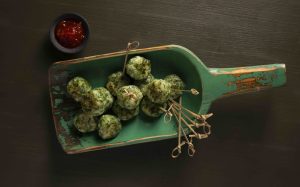
1 small garlic clove, crushed
1 small handful of flat-leaf parsley, finely chopped
1 small handful of coriander, finely chopped
1 tbsp finely chopped dill or mint leaves
2 spring onions, thinly sliced
zest of 1 unwaxed lemon, then cut into wedges
1 tsp ground cumin
1⁄2 tsp smoked paprika
1 pinch of dried chilli flakes
1 medium free-range egg
3 tbsp fresh breadcrumbs
Maldon sea salt
freshly ground black pepper
olive oil, for frying
Tomato chilli jam (see page 34), to serve
Greek yoghurt, to serve (optional)
rose harissa, to serve (optional)
Pat the fish dry with kitchen paper and finely chop by hand, or pulse very briefly in a food processor – you want texture, not paste.
Transfer to a large mixing bowl with the garlic, herbs, spring onions, lemon zest, cumin, paprika, dried chilli flakes, egg and breadcrumbs. Season generously with sea salt and pepper and mix well. Cover, and chill in the fridge for 20 minutes, if you have time – it helps them hold their shape later.
When you’re ready to cook, form the mixture into small balls, quenelles or little patties.
Heat a shallow layer of olive oil in a frying pan over a medium heat, and cook the fish bites for 3–4 minutes on each side, until deeply golden and cooked through.
Drain briefly on kitchen paper, then serve immediately with lemon wedges and tomato chilli jam or yoghurt swirled with a little harissa, if you like.